
Dairy
Milk, drinking yoghurts, set yoghurts, cheeses, creams, cultured dairy, and dairy desserts

Natural vitamin and mineral fortification for dairy manufacturers
Dairy is one of the oldest fortified food categories. Vitamin D milk has been on UK shelves since the 1940s, and synthetic vitamin codes have been on dairy labels for the better part of a century. Consumer label scrutiny is now turning that legacy into a commercial liability - and an opportunity for the brands moving first to plant-derived sources.
BIOVIT’s stability data covers UHT, pasteurisation, fermentation, and ambient dairy formats - established through RSSL and Eurofins, with overage calculations per processing route from Eiméar. The portfolio is compatible with yoghurt cultures, cheese-making, and the full breadth of dairy processing methods.
Samples available on request. Reformulation support included with every order.
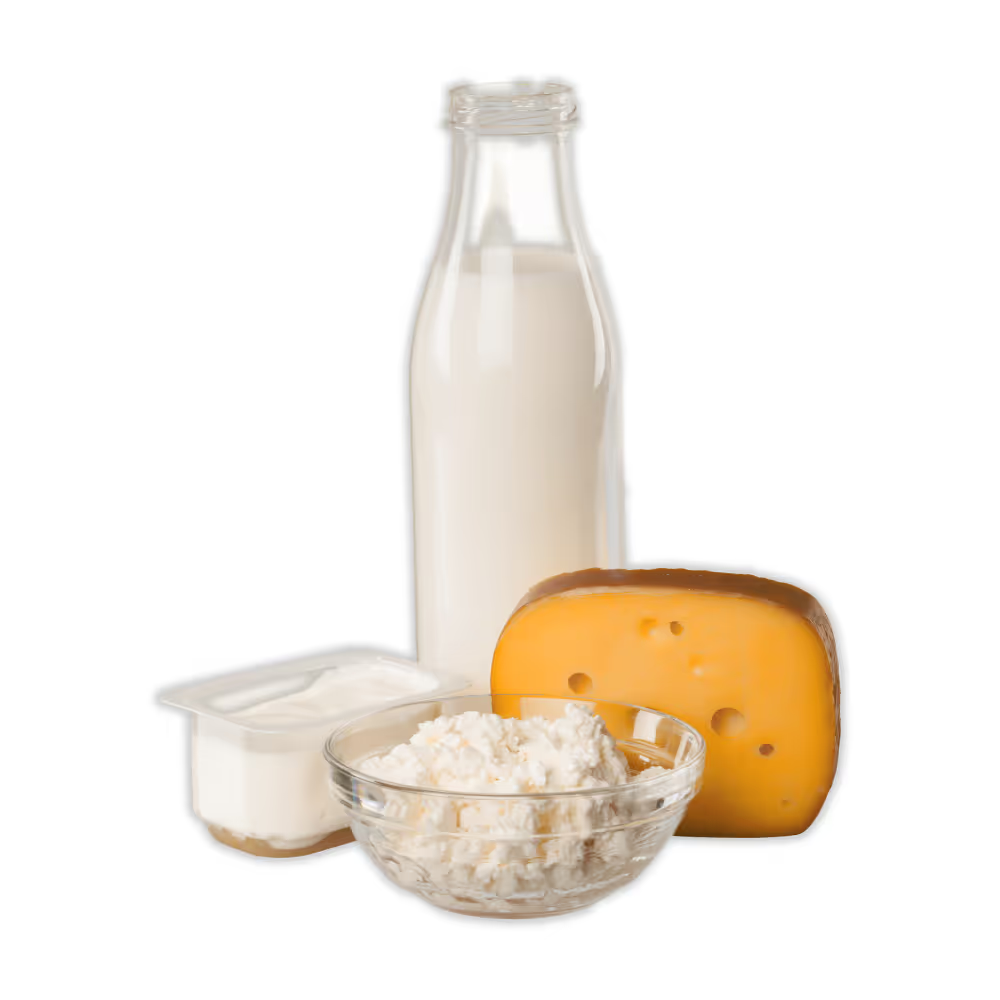
Format Specification
Dairy invented mass-market vitamin fortification. The synthetic forms from the 1940s are still on most dairy labels today - and shoppers reading the back of pack are increasingly noticing. BIOVIT supplies plant-derived alternatives across the nutrients dairy brands traditionally fortify with, with the stability data to clear UHT and pasteurisation.
Bring plant-derived fortification to your next dairy brief
Samples dispatched within a week. Reformulation support included.
Natural ingredients built for the dairy aisle
Three single-ingredient picks that map onto the three nutrients dairy brands have traditionally fortified with - Vitamin D, Vitamin A, and Iodine - now available from genuinely plant-derived sources rather than the synthetic forms that have dominated dairy labels for decades.
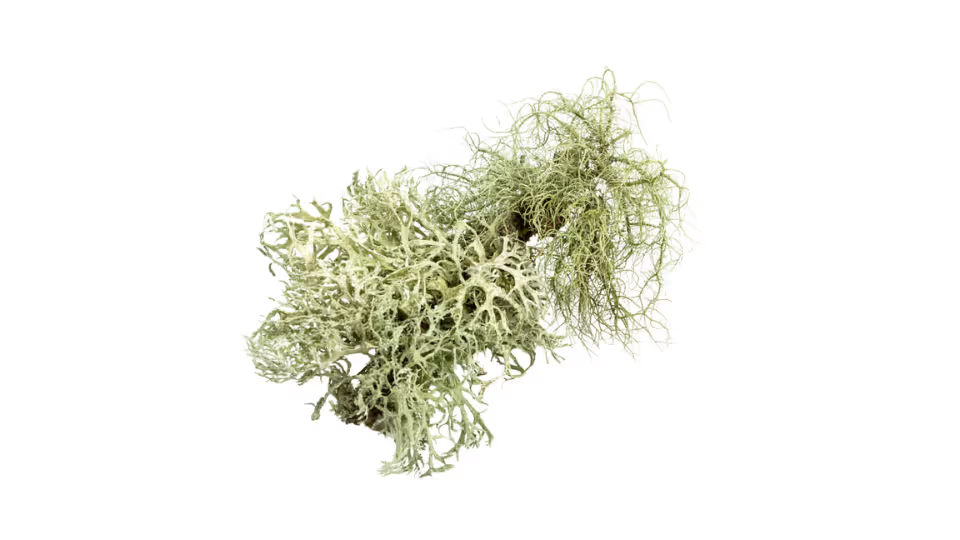
Vitamin D3 (lichen)
The original dairy fortification nutrient - now from a plant source. Heat-stable through UHT and pasteurisation with calculated overages.

Vitamin A (moringa)
The standard fortification target for skim and low-fat dairy - replacing the Vitamin A removed with the fat. Plant-derived alternative to synthetic retinyl palmitate.
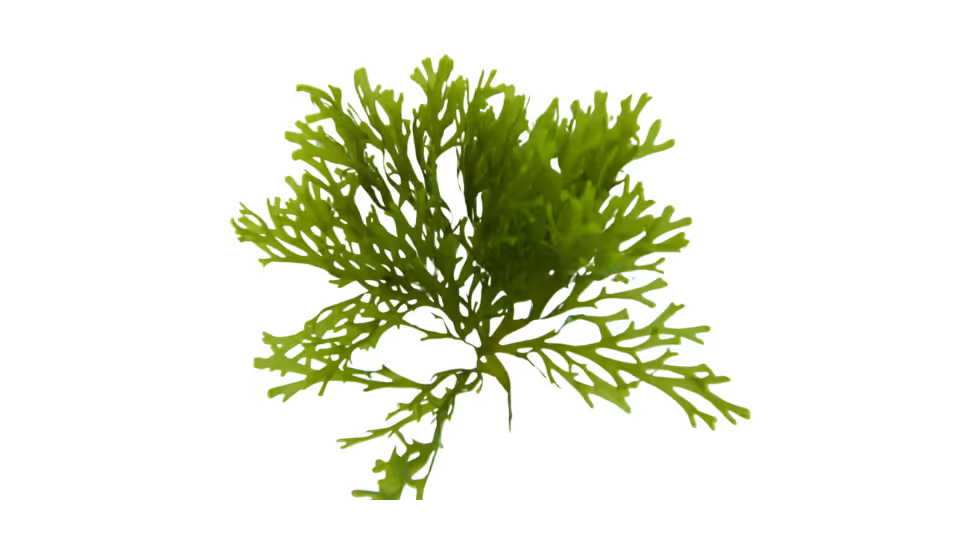
Iodine (seaweed)
UK dairy is one of the largest dietary iodine sources. Seaweed-derived iodine builds on that natural story rather than declaring as synthetic potassium iodide.
Three formulation-ready premixes for dairy brands
BIOVIT blends mapped onto the three commercial positions dairy brands compete on - mainstream daily-use breadth, premium nutritional completeness, and the seasonal immunity claim driving drinking yoghurts and fortified milks.

BIOVIT Daily Support Premix Blend
Eight-nutrient base for everyday dairy ranges - the default fortification spec for fresh milk, drinking yoghurt, and mainstream fortified dairy formats. Covers the foundational claim set in a single inclusion, with declarations that read as a short plant-source list rather than synthetic vitamin codes.

BIOVIT Broad Spectrum Blend
Multi-nutrient breadth for premium dairy and full-nutrition ranges - where the brand is selling complete nutritional coverage rather than a single claim. Stable through UHT and pasteurisation with calculated overages from Eiméar.

BIOVIT Immune Health Blend
Vitamin D, Vitamin C, and Zinc for immunity-positioned dairy - the seasonal commercial pull driving winter drinking yoghurts, kids’ fortified milks, and immunity-led range extensions.
Frequently asked questions
Practical answers to the questions buyers and formulators ask most when specifying natural fortification for dairy - processing compatibility, fermentation, cheese-making, format coverage, and lead times.
Yes. UHT at 135-150°C is within the BIOVIT stability range with calculated overages. Retention profiles are established through RSSL and Eurofins, with Eiméar tuning the overage calculation per product, pack format, and target shelf life.
Yes. BIOVIT’s vitamins and minerals do not interfere with starter culture activity, fermentation time, or pH development. The ingredients sit through fermentation alongside the milk base without disrupting the biological work happening in the vat.
Yes. The ingredients are compatible with rennet coagulation, curd handling, and the full range of cheese-making processes. Fortification of cheese is less common than milk and yoghurt, but Eiméar can build overage calculations for hard, soft, and processed cheese formats where the brand wants to lead on nutritional positioning.
Ambient and long-life dairy carry the longest shelf-life targets - typically 6-9 months ambient for UHT milk. Eiméar’s overage calculations factor in shelf-life targets so the label-claim level is met at end of shelf life, not at day of manufacture.
Vitamin D3 (lichen), Vitamin A (moringa leaf), and Iodine (seaweed) are the three single ingredients most relevant to traditional dairy fortification. Daily Support, Broad Spectrum, and Immune Health are the three formulation-ready blends.
Yes. Where the off-the-shelf blends above don’t map cleanly onto your range - children’s drinking yoghurts, gut-health positioning, ageing or bone-health ranges - Eiméar formulates bespoke premixes per project and dairy format.
Single ingredients: 1 kg MOQ with an approximate 1-week lead time. Premix blends: 5 kg MOQ with an approximate 4-week lead time. Samples available on request - contact the team to specify quantity and shipping arrangements.