
Natural vs Synthetic: The Bioavailability Trial
Switching from synthetic to natural has always raised one technical question - does the body absorb it the same way?
BIOVIT partnered with Swansea University to run a 30-day human intervention trial comparing the bioavailability of organic, natural micronutrients with their synthetic equivalents, funded by UKRI through the Better Food For All programme.
One clear conclusion followed.
Study Design
Introduction
Most fortified foods use synthetic or non-food sources of vitamins and minerals rather than organic ones derived from plants, fungi, and algae. Synthetic vitamins are not always identical in shape and structure (Vandamme et al., 1992), and may lack the synergistic compounds present in micronutrients from plant extracts.
Fortifying foods with organic micronutrients may offer advantages in consumer preference and sustainability (SAFE, 2024), but adoption has been limited by a lack of evidence on their absorption and utilisation compared with synthetic sources.
This pilot study aims to characterise the acute and moderate-term changes in blood vitamin and mineral concentrations in response to organic or synthetic micronutrient supplementation in healthy individuals.

Methods
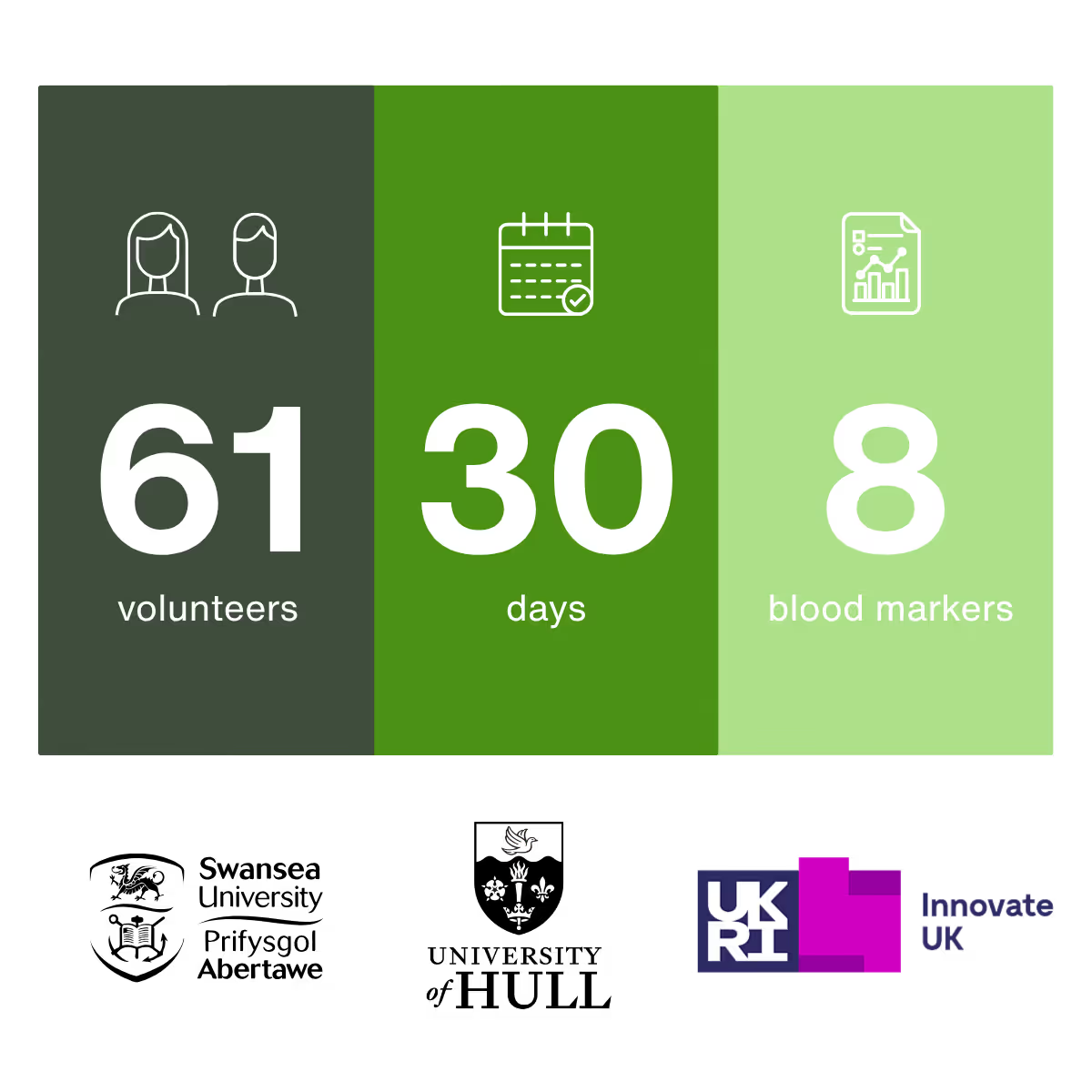
This was a single-blind, randomised interventional trial involving 61 healthy volunteers (34M:27F, 33.2 ± 10.6 years, BMI 25.6 ± 4.5 kg·m⁻²). Participants were split into two arms: one consumed an organic supplement supplied by BIOVIT (ORG), and the other a synthetic one (SYN). The study comprised a 2-hour ingestion trial and a 28-day ingestion trial. Both supplements contained equivalent dosing for 12 micronutrients at 60% recommended intake (RI).
Venous blood samples were collected at baseline (fasting, TP1), 2 hours post-ingestion (TP2), and after 28 days of supplementation (fasting, TP28). Samples were centrifuged on collection and stored as plasma or sera for analysis of calcium, iron, zinc, vitamin B7, vitamin B9, vitamin B12, vitamin C, and vitamin D.
Secondary variables of participant health - blood lipids and glucose, anthropometry, and cognition - were taken at both visits. Data were analysed via repeated-measures ANOVA with Bonferroni-corrected pairwise comparisons to assess changes in variables over time against conditions (p<0.05 deemed statistically significant).
-1250875503.jpeg)
Results
There were no significant differences in the change in nutrient levels over time between the ORG and SYN groups in either the 2-hour or 28-day studies.
In the 28-day study, both groups saw significant increases in B9 (5.73 vs 7.23 µg/L; F=5.46, p<0.05) and B7 (1.432 vs 1.938 nmol/L; F=5.36, p<0.05) from TP1 to TP28, with no other significant differences found.
There were no significant differences in the change in other health measures over time between the two groups.
Conclusion
Circulatory levels of key vitamins and minerals are complementary across both organic and synthetic supplements, in both an acute (2-hour post-ingestion) and moderate-term (28-day ingestion) context.
The findings indicate that organic vitamin and mineral supplements offer bioavailability comparable to synthetic ones. This may carry great significance for the future use of organic vitamins and minerals in foods, drinks, and supplements.

Prof Richard Bracken
Swansea University Research Lead
Prof Bracken led the design and execution of the bioavailability trial. His research team at Swansea University specialises in human nutrition, exercise physiology, and micronutrient metabolism.

Equivalent bioavailability confirmed.
BIOVIT's natural vitamins and minerals delivered equivalent bioavailability to their synthetic counterpart, measured via blood levels. Natural doesn't mean compromise - it means the same efficacy from a better source.
That removes the primary technical objection to switching from synthetic to natural: your product delivers the same nutritional benefit to consumers, while gaining the commercial advantages of natural sourcing - strong consumer preference, cleaner labels, the BIOVIT Trust Mark (+27% willingness to buy), and EFSA-authorised health claims.
Natural sourcing doesn't limit your use of health claims in any way. Claims rely on the vitamin or mineral being present at the required level. A product with the correct amount of vitamin D3, for example, can make the same claims whether the D3 comes naturally from ingredients or is added synthetically - the only difference is a cleaner, more appealing ingredients list.
BETTER FOOD FOR ALL.

Put proven bioavailability into your product
The trial settles the science. The next step is yours - request a sample to formulate with, or book a meeting to talk through your application.