BIOVIT Research
BIOVIT's proposition is built on evidence, not claims. Clinical trials, consumer research, and stability testing - all conducted with independent research partners and funded by UKRI and the Welsh Government.

Funded Research.
Peer-Reviewed Evidence. Real-World Results.
BIOVIT's research programme is backed by UKRI Innovate UK through the Better Food For All programme - funding that spans bioavailability science, natural nutrient stability, and pioneering circularity work with Swansea University's Natural Products BioHUB..
This isn't research for its own sake.
Every trial, every publication, every partnership exists to give food and drink manufacturers the evidence they need to choose natural with confidence.
From peer-reviewed bioavailability data to the UK's first systematic review of micronutrient gaps in GLP-1 users, BIOVIT brings the science - so your NPD team doesn't have to start from scratch.

Bioavailability & Efficacy
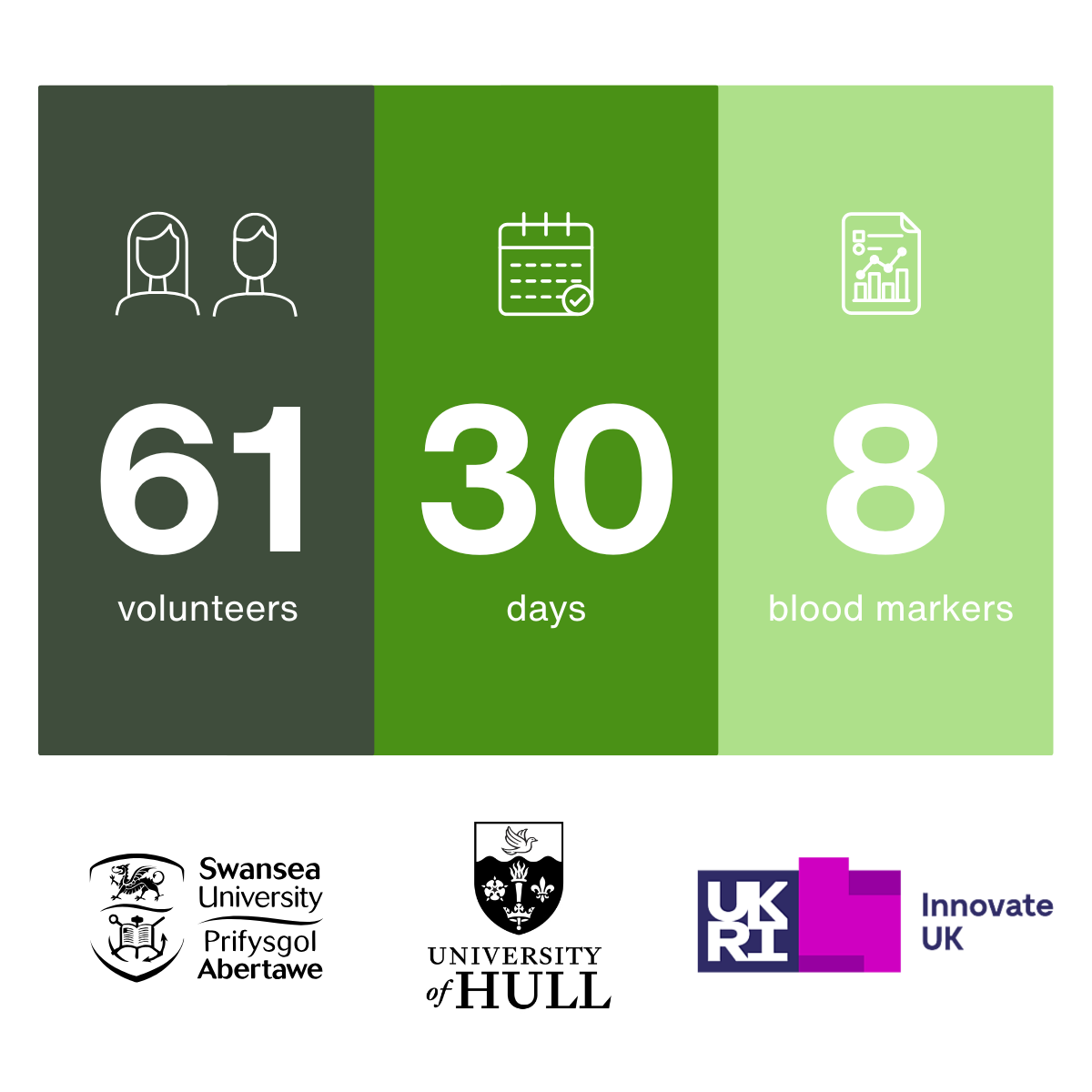
Swansea University conducted a 30-day human intervention trial comparing organic and synthetic micronutrients in 61 healthy adult volunteers.
Across all measures, natural and synthetic groups showed equivalent bioavailability - confirming that natural sourcing carries no absorption disadvantage.
Funded by UKRI Innovate UK through the “Better Food For All.” programme. Led by Prof Richard Bracken, Swansea University.
Stability
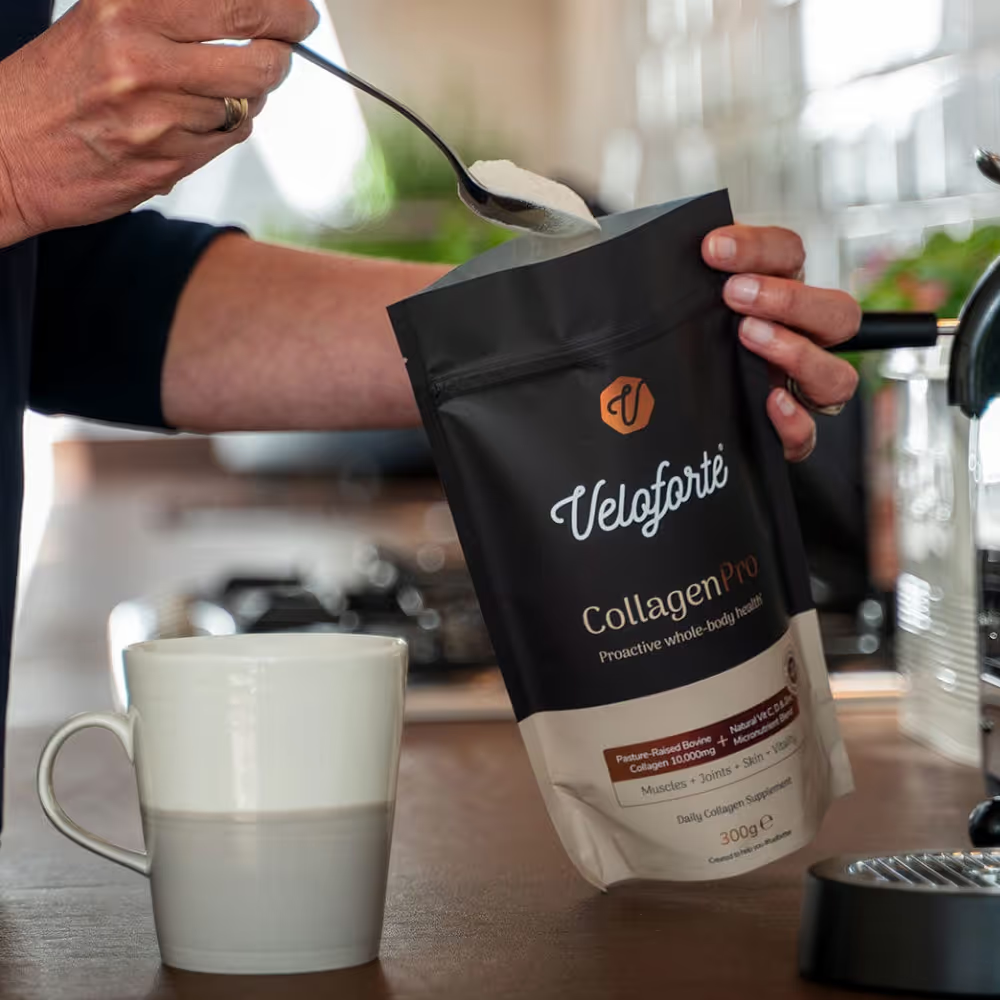
In partnership with Campden BRI, RSSL, and Eurofins, BIOVIT is building one of the most comprehensive natural nutrient stability databases in the industry - tracking how vitamins and minerals hold up through real-world processing conditions.
Data covers UHT, pasteurisation, baking, carbonation, dry blending, retort, and ambient storage, giving brands confidence that natural nutrients survive the journey from formulation to finished product.
This database enables precise overage calculations for any product format, ensuring label-claim compliance after processing - so what's on the label matches what's still in the product at the point of sale.
Circularity
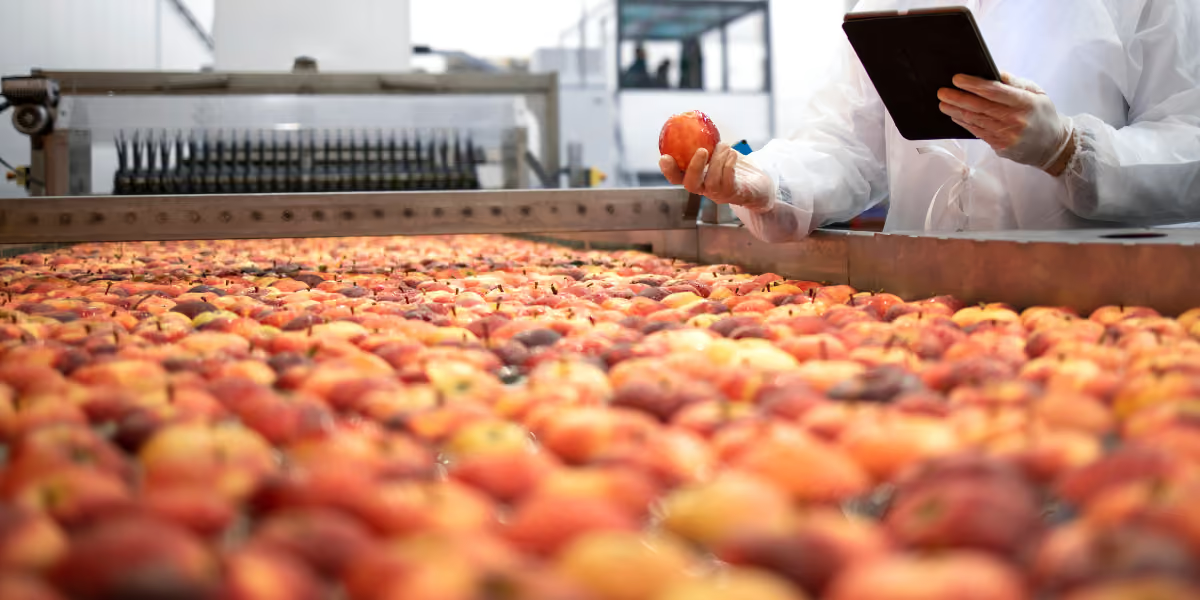
BIOVIT runs circularity research with Swansea University's Natural Products BioHUB, recovering natural micronutrients from food and agricultural waste that would otherwise go to landfill.
Project 1 - Circular Vitamin C extracts Vitamin C from apple pomace, the waste left after juice pressing. Funded by Innovate UK's Net Zero Industry Launchpad and led by Prof Chedly Tizaoui, it won both the Enabling Technologies for Ingredients award and overall Innovation of the Year at the IFE Ingredients Awards 2026.
Project 2 - Circular Micronutrient Recovery targets Welsh waste streams: seaweed and kelp for iodine, spent coffee grounds for iron and copper, and rapeseed cake for selenium. Funded by the Welsh Government SMART Fund and led by Prof Christopher Wright, with partners including PlantSea and Welsh Coffee Co.
Interested in Circular Nutrition?
Partner with BIOVIT through a Waste Only Agreement or Full Circular Reintegration - where recovered nutrients go back into your own products.
GLP-1 Nutrition
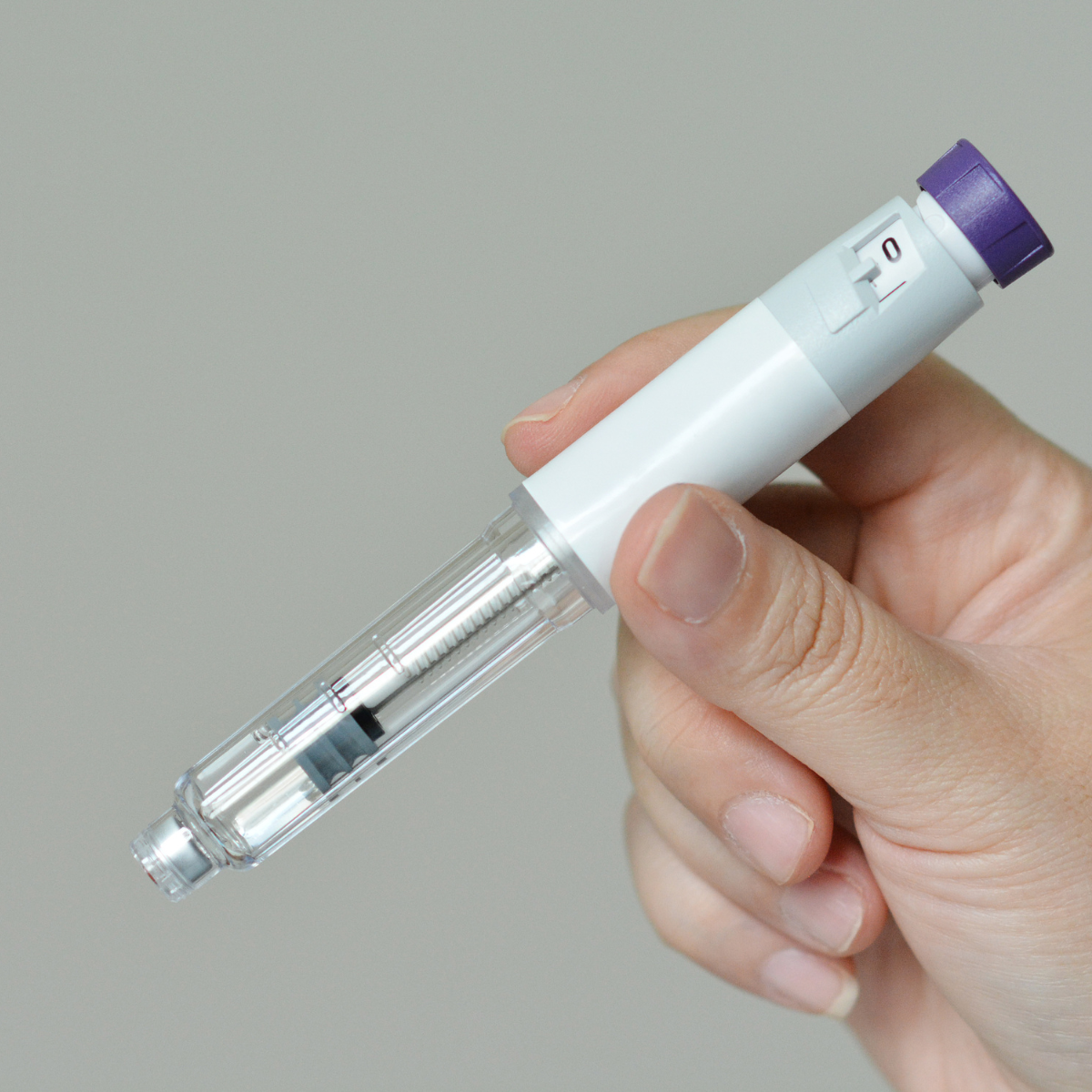
With 3.4 million NHS patients set to be prescribed GLP-1 medications by 2030 — and millions more via private prescription — nutritional support for this growing cohort is urgent. GLP-1 users face significant deficiency risk: 13% develop at least one micronutrient deficiency within 6 months of starting treatment, rising to 22% by 12 months (Butsch et al., 2025).
We're currently preparing a study with Hull and Rotherham NHS Trusts, Imperial College London, and Swansea and Sheffield Universities, trialling our AI-assisted personalised nutrition system as part of wraparound care for GLP-1 patients.
Beginning in 2026, the study aims to help GLP-1 users maintain healthy micronutrient levels even as appetite and food intake fall.
Consumer Research
Multiple proprietary surveys quantifying consumer preference for natural vitamins and minerals in food and drink products, run in partnership with Vypr across UK shoppers, functional drink users, GLP-1 users, and gut-health consumers.
Key findings: 92% of UK shoppers want the vitamins in their food to be natural, 67% chose a BIOVIT-fortified drink over synthetic alternatives in a controlled taste test, and 60% would pay more for naturally fortified food.
Vypr research is ongoing - further studies are planned to keep tracking consumer preference as new product categories and formats come to market, keeping BIOVIT's evidence base current rather than static.
Sources: Vypr (255–505 respondents, 2025–2026), plus third-party data from SAFE, HealthFocus, Innova, PwC, and Acosta Group.

BIOVIT Trust Mark Commercial Impact
Swansea University and Kaleidoscope tested the BIOVIT Trust Mark's impact on consumer purchasing behaviour - measuring how natural labelling changes buying decisions in a controlled study.
Results: +27% willingness to buy,
+24% willingness to try,
+18% liking score,
+10% price premium.
For approximately 1% impact on cost of goods, the Trust Mark delivers a disproportionate return on shelf appeal.
Full methodology, sample sizes, and the complete study are available on the Trust Mark page.

EFSA Health Claims
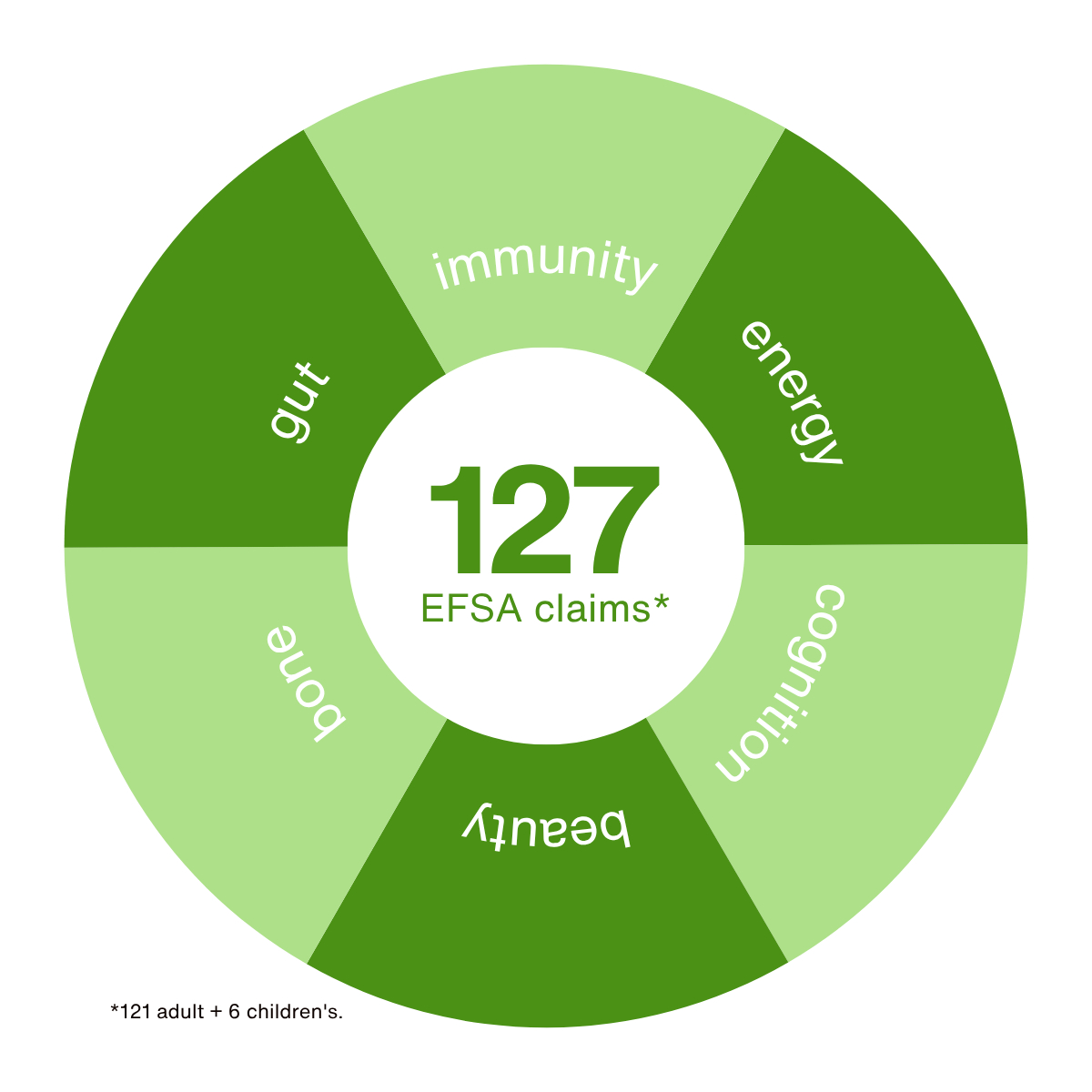
BIOVIT ingredients carry a comprehensive library of EFSA-authorised health claims - 120+ in total, spanning immunity, energy, cognition, beauty, bone, and gut health.
Every claim is backed by the science required for lawful use on pack, giving brands a ready-made route to substantiated, regulator-approved messaging.
Organised by ingredient and by health category, the full guide includes exact on-pack wording and minimum inclusion levels needed to unlock each claim - taking the guesswork out of formulation and labelling.
Collaborate on research with BIOVIT
We're always looking to extend our research partnerships - with universities, NHS trusts, and industry, in pursuit of natural, clinically proven micronutrient solutions.
If you're working on nutrition science, food innovation, or circularity and think there's a fit with BIOVIT's research programme, we'd like to hear from you.
.jpeg)
Meet BIOVIT's research team
Meet the researchers, nutritionists, and specialists driving BIOVIT's science forward.