
Turn Your Waste Into Your Next Ingredient
BIOVIT recovers natural vitamins and minerals lost during food processing and reintegrates them as clean-label ingredients - clinically proven, organic and natural, and backed by two live research programmes with Swansea University.
Key findings from our groundbreaking research
Working with Swansea University, we're identifying exactly how much nutritional value is lost during food processing - and proving it can be recovered. Two live circularity research projects are already turning waste streams like apple pomace and seaweed into clean-label, plant-derived ingredients.
of Vitamins and minerals can typically be lost during food processing
Total R&D funding across BIOVIT's research programme
Live circularity research projects with Swansea University
Two live circularity research projects with Swansea University
BIOVIT currently runs two live circularity research projects, both delivered with Swansea University's Natural Products BioHUB, but funded separately and targeting different feedstocks and nutrients.
Project 1: Circular Vitamin C
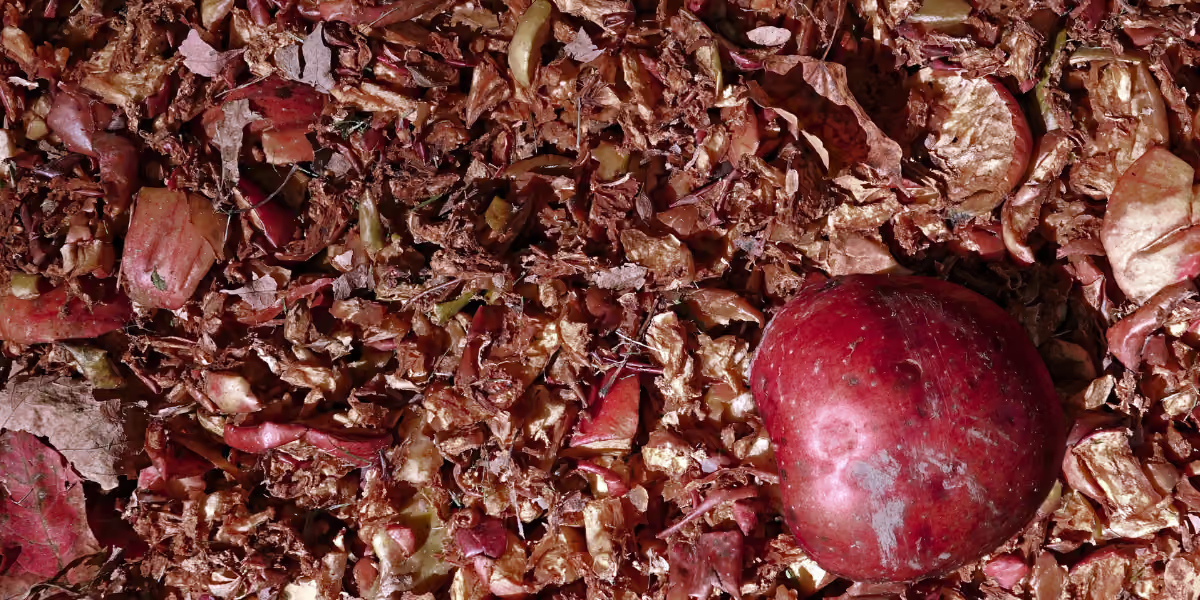
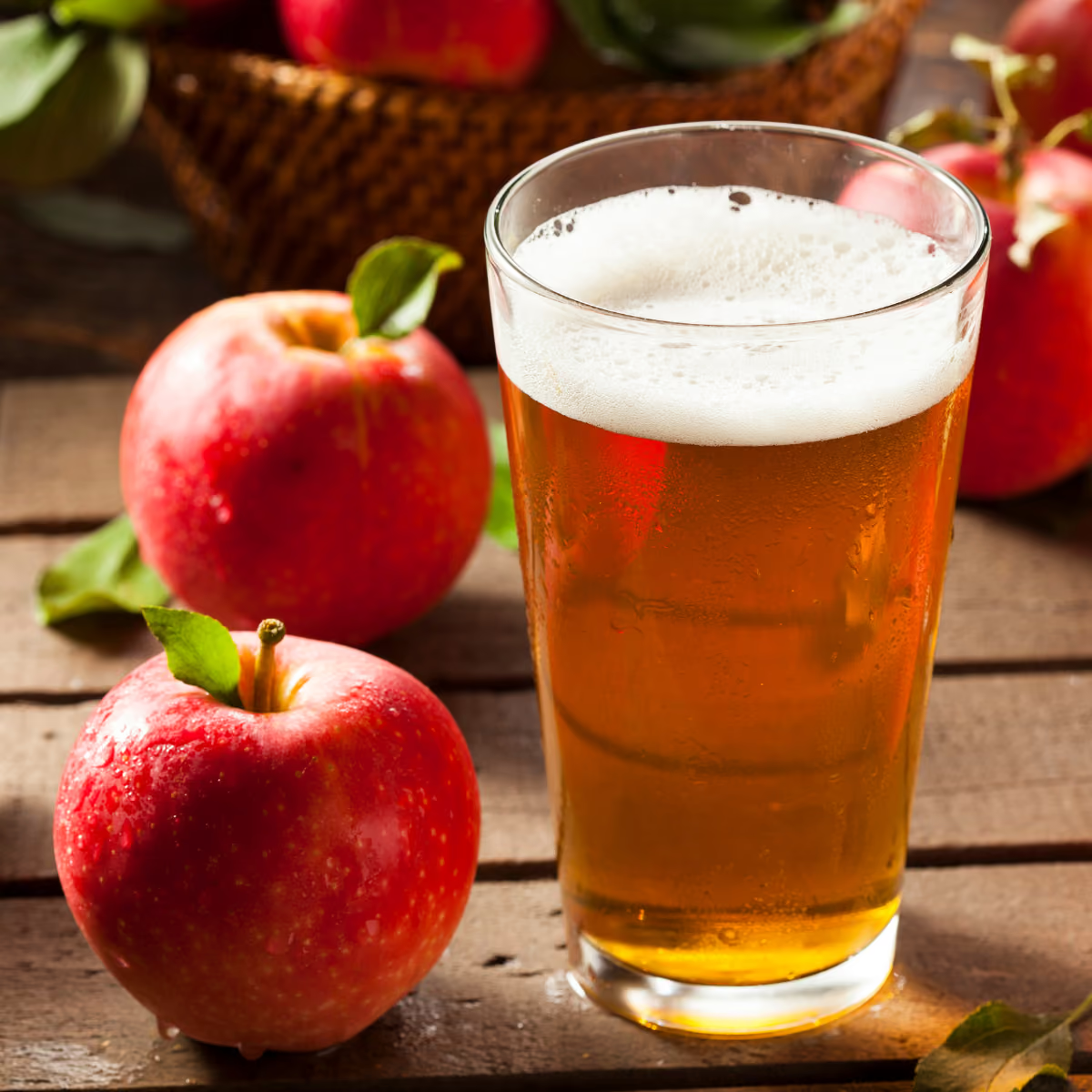
This project recovers natural Vitamin C from apple pomace — the dry waste left over after apple juice and cider production. Pomace is nutrient-rich and available in large quantities in South West Wales, where it's usually sent to landfill, emitting significant volumes of greenhouse gases.
Rather than relying on synthetic, petrochemical-derived Vitamin C, the project produces a circular, naturally derived ingredient ready to be reintegrated into food and drink. Extraction development is led by the Swansea University team.
Building a natural vitamin industry in Wales
Most of BIOVIT's ingredients are currently manufactured from tropically grown plants. This project is an important step towards sustainable, domestic production of natural vitamin alternatives - building a range of natural vitamin extracts produced wholly within Wales, and supporting BIOVIT's transition to carbon-neutral, circular manufacture.
The project also includes exploration of the possibility of giving apple juice producers a circular manufacturing opportunity of their own, fortifying their juices with vitamins extracted from their own waste.
This work has already earned industry recognition. At the IFE Manufacturing Ingredients Awards 2026, held in association with the IFST, BIOVIT won both Innovation of the Year and the Enabling Technologies for Ingredients award, a double win that reflects the significance of this project for the future of natural ingredient manufacture in the UK.
Funded by Innovate UK, delivered with Swansea University

Funded by Innovate UK, under the Launchpad: Net Zero Industry, South West Wales programme.
Academic lead: Professor Chedly Tizaoui, Co-Principal Investigator (Chemical Engineering; Water and Resources Recovery Lab), leading optimisation and validation of the extraction technology, with Dr Stephen Mandale as academic co-investigator.
The project was named Winner of the IFE Ingredients Awards 2026, taking both the Enabling Technologies for Ingredients award and the overall Innovation of the Year prize.
Project 2: Circular Micronutrient Recovery (Welsh Wastes)
BIOVIT recovers micronutrients from Welsh food-processing and agricultural waste streams. Three feedstocks are currently prioritised, each targeting different nutrients.
Most fortification today relies on synthetic vitamins made from petrochemicals, or minerals mined from rock. BIOVIT takes a different route: recovering the natural micronutrients already present in fruit, vegetable, and food-processing by-products before they're lost to waste, and reintegrating them into food and drink as a targeted, plant-derived ingredient.
The result is a circular, traceable ingredient with a food-matrix profile - not just an isolated nutrient - available as organic and natural, manufactured in the UK, and able to carry a 100% food-source ingredients declaration on the label.

Three Welsh waste streams, three nutrient recoveries

Seaweed and Kelp
Drift kelp cleared from Welsh beaches, plus seaweed processing waste. Recovers iodine and potassium.

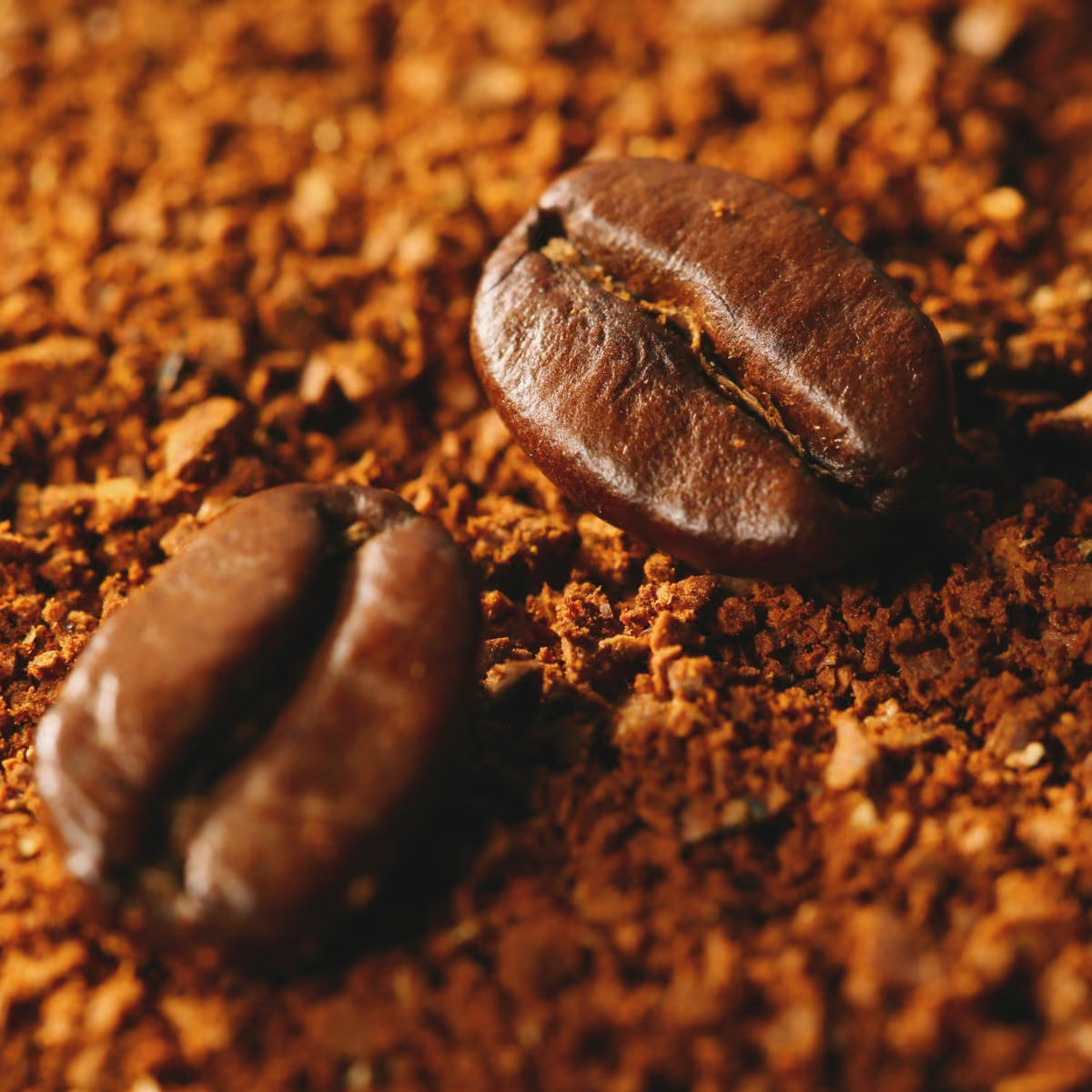
Spent Coffee Grounds
A high-volume by-product of coffee roasting and brewing. Recovers iron, copper and Vitamin B3.

Rapeseed Cake
The nutrient-rich residue left after cold-pressing Welsh rapeseed oil. Recovers selenium.
A cleaner label, a lower footprint, a stronger case
Circular micronutrients give brands something conventional fortification cannot. Because the nutrients are recovered from food, they arrive with their food matrix intact, a traceable origin, and a declaration that reads as food rather than chemistry.
That difference shows up on the label, in processing classification, and in the sustainability data you can report.
Cost-neutral, and often better
Valorising a by-product through BIOVIT is typically at least cost-neutral against existing gate fees and haulage, and frequently delivers a net saving against disposal.
Rather than converting waste into lower-value outputs such as animal feed, BIOVIT extracts the high-value micronutrient fraction first.
Non ultra-processed - NOVA Group 2
BIOVIT Circular ingredients sit in NOVA Group 2, processed culinary ingredients derived from food. As retailers and consumers pay closer attention to how processed a product is, fortification choices increasingly shape where a finished product lands on the scale.
Circular nutrients are recovered from food rather than built from isolates, so labels stay clean and the finished product's processing classification is unaffected.
Stronger ESG credentials
Diverting waste from landfill is a start, but on its own it makes for a thin line in a sustainability report. What partners increasingly need is data specific enough to stand up to scrutiny - from retailers, from investors, and from their own reporting obligations.
Working with BIOVIT produces exactly that. Partners receive reportable carbon and circularity data tied to their own feedstock: what was recovered, what it displaced, and what that means in emissions terms. It supports genuine disclosure rather than a diversion statistic, and it gives commercial teams something substantive to put in front of buyers.
Questions about circular recovery
Whether you are a producer with a waste stream or a brand looking for circular ingredients, here is what people usually want to know first. If your question is not covered, our team can talk it through.
This depends on the feedstock and project — contact our team for a sidestream assessment specific to your site.
No. Under a Waste Only Agreement, BIOVIT reclaims the nutrients into its own ingredient supply. Under Full Circular Reintegration, you receive the recovered nutrients back to use in your own products.
Yes - available as organic and natural, in line with the rest of the BIOVIT portfolio.
Standard BIOVIT MOQs apply: 1 kg (~1 week) for single ingredients, 5 kg (~4 weeks) for blends and premixes.
Do you have a waste stream?
If your process generates fruit, vegetable, or food-processing by-products, we would like to hear from you.